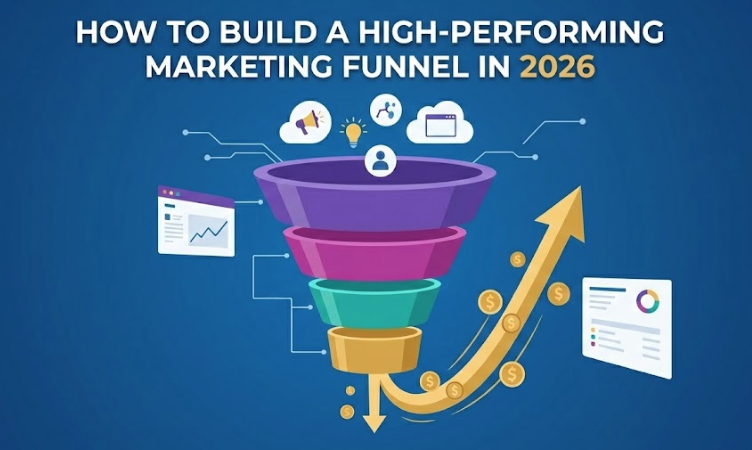
A Practical Framework for Awareness to Consideration to Conversion
Marketing funnels in 2026 are no longer static pipelines. They are dynamic, data-informed systems powered by automation, personalization, and user intent signals. Businesses that treat marketing as a series of isolated campaigns are seeing diminishing returns. Brands winning today are building integrated funnels that guide prospects intentionally from first interaction to long-term loyalty.
At The Kool Source, we approach funnels as revenue architecture. They are engineered systems designed to generate predictable growth.
This guide breaks down how to build a high-performing marketing funnel with actionable tips to help marketers stay ahead.
Stage 1: Awareness
Attract the Right Traffic
The awareness stage is about visibility, but not vanity. Traffic without intent does not convert. In 2026, success comes from aligning message, platform, and audience behavior.
What Works Now
- AI-optimized content clusters built around search intent
- Short-form video tied to SEO strategy
- Strategic paid media testing
- Schema-enhanced local SEO for AI/GEO
- Authority positioning through thought leadership
The key is consistency across channels. A blog, ad, or video should not stand alone. Each asset should guide the audience to a clear next step.
Awareness Framework
Pain Point → Insight → Authority → Soft Next Step
Start by identifying a problem your audience actively feels. Provide meaningful insight. Reinforce credibility with proof or perspective. Invite them to continue the conversation.
The goal is not to sell. It is to earn attention.
If traffic feels inconsistent or unpredictable, the structure at the top of your funnel likely needs refinement.
Stage 2: Consideration
Build Trust and Position Authority
Once someone engages with your brand, the real work begins. The consideration stage is where many funnels break down. Brands either push too aggressively or fail to nurture properly.
In 2026, consideration is driven by education, proof, and personalization.
High-Performing Consideration Assets
- Case studies with measurable results
- Comparison guides and strategic breakdowns
- Email nurture sequences
- Retargeting campaigns with layered messaging
- Interactive tools or assessments
At this stage, your audience is asking:
- Can I trust you?
- Do you understand my problem?
- Are you better than the alternatives?
A High-Converting Nurture Structure
- Welcome with immediate value
- Authority builder, such as proof or data
- Education with objection handling
- Social proof
- Clear offer
When structured properly, this sequence warms prospects so conversion feels natural.
At The Kool Source, we often see that small improvements in nurture flow can significantly increase close rates without increasing ad spend.

Stage 3: Conversion
Reduce Friction and Drive Action
Conversion in 2026 is about removing friction, not adding pressure.
Brands that convert consistently focus on clarity, simplicity, and timing.
What Increases Conversion Rates
- A clear value proposition above the fold
- Focused landing pages with one primary action
- Personalized follow-up through email or SMS
- Behavior-based retargeting
- Streamlined booking or checkout processes
The Conversion Formula
Problem → Solution → Outcome → Proof → Urgency → Clear Call to Action
Your offer must answer three questions:
Why now?
Why you?
Why this solution?
If your sales cycle feels longer than expected, the issue is often clarity within the offer or misalignment between stages.
Funnels that convert efficiently feel seamless because each step logically leads to the next.
The Modern Funnel Tech Stack
A high-performing funnel in 2026 relies on aligned infrastructure:
- CRM with automation
- Email marketing platform
- Landing page system
- Analytics and attribution tracking
- Retargeting integration
- AI-assisted segmentation and content tools
Technology alone does not create performance. Alignment does.
Each system must communicate with the others, and data must inform decisions at every stage.
Common Funnel Mistakes
Even established brands make these errors:
- Driving traffic without structured lead capture
- Failing to nurture after opt-in
- Weak or unclear calls to action
- Not tracking meaningful metrics
- Selling too aggressively in the awareness stage
- Ignoring retargeting and follow-up
The difference between a functioning funnel and a high-performing funnel is optimization.
When we map the full customer journey at The Kool Source, revenue leaks often become immediately visible.
Metrics That Matter
Awareness
- Cost per click
- Engagement rate
- Traffic quality by source
Consideration
- Opt-in rate
- Email open and click-through rates
- Lead engagement depth
Conversion
- Cost per acquisition
- Close rate
- Customer lifetime value
Without consistent measurement, optimization becomes guesswork.

Final Takeaway
In 2026, marketing is not about doing more. It is about sequencing correctly.
A high-performing marketing funnel:
- Attracts the right audience
- Builds trust intentionally
- Converts through clarity and timing
- Improves continuously using data
Businesses that build structured funnel systems create predictable revenue instead of chasing temporary spikes.
If your funnel feels fragmented or underperforming, the issue may not be activity. It may be architecture.
At The Kool Source, we build scalable marketing systems designed for sustainable growth. Whether you are refining an existing funnel or building from the ground up, structure makes the difference.
Frequently Asked Questions
What is a marketing funnel in 2026?
A marketing funnel in 2026 is a structured, multi-channel system that guides potential customers from awareness to consideration to conversion using data, automation, and personalized messaging. Modern funnels are dynamic and behavior-driven rather than static linear paths.
How long does it take to build a high-performing marketing funnel?
A foundational funnel can be structured within 30 to 60 days, depending on complexity, assets, and tech stack. Optimization is ongoing. High-performing funnels improve continuously through testing, analytics, and refinement.
What tools are needed to build a marketing funnel?
Most businesses need a CRM, email marketing platform, landing page, analytics tracking, and retargeting capabilities. AI-driven segmentation and automation tools further improve performance and personalization.
Why is my marketing funnel not converting?
Common causes include unclear messaging, weak offers, lack of follow-up, poor audience targeting, or friction in the conversion process. Many funnels fail because the awareness, consideration, and conversion stages are not properly aligned.
How can The Kool Source improve my funnel?
The Kool Source audits your full customer journey, identifies revenue leaks, optimizes messaging and automation, and builds structured systems that increase conversion rates and improve long-term customer value.
- How to Build a High-Performing Marketing Funnel in 2026 - March 4, 2026
- Why “Agentic Commerce” Is Going to Revolutionize Online Shopping - February 2, 2026
- Mastering GEO for Marketing in Atlanta in 2026 - January 5, 2026
0 Comments