
By now, most paid media marketers understand that TikTok works. The real question in 2026 is not whether to use TikTok Ads. It is whether you are using the platform in a way that aligns with how it has evolved over the past 18 to 24 months.
TikTok is no longer the scrappy testing platform it once was. It is becoming more automated, more intent-driven, and more opinionated about what it wants advertisers to do. Ignoring those shifts is where performance starts to break down.
Here is what experienced paid advertisers should actually be watching and adjusting for as we move into 2026.
1. Creative Is Now the Primary Optimization Lever, Not Targeting
TikTok’s move toward automation mirrors what we have already seen on Meta and Google, but it is happening faster. Interest-based targeting still exists, but it is becoming less influential than many advertisers realize.
What is driving performance now is creative signal density. This includes strong hooks, clear visual storytelling, and fast engagement feedback such as watch time, rewatches, and shares.
TikTok’s algorithm is increasingly creative-led, meaning your videos are effectively your targeting. The platform learns who to serve your ad to based on how users interact with the content itself, not how precisely you define an audience.
For 2026, expect broader targeting to become the default best practice, faster creative fatigue, and higher pressure to refresh creative weekly instead of monthly.
If your team does not have a system for consistent creative production and testing, TikTok will continue to underperform regardless of budget.
2. Search Behavior on TikTok Is Being Quietly Monetized
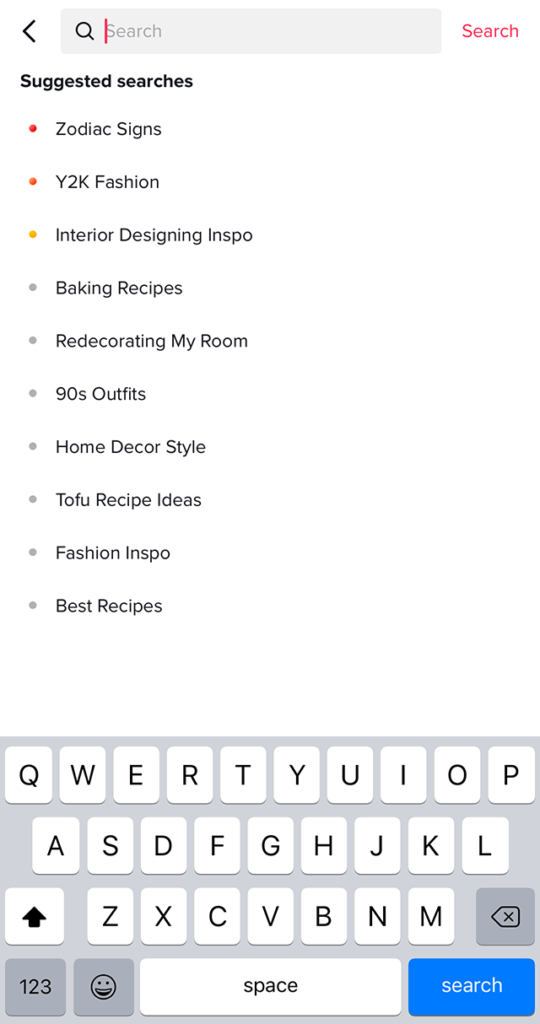
TikTok is no longer just a discovery platform. It is becoming a search engine, especially for Gen Z and Gen Alpha. Users actively search for reviews, best-of lists, how-to content, and local recommendations.
TikTok’s Search Ads and keyword-triggered placements are still underutilized, but they are becoming one of the most intent-rich surfaces on the platform.
This matters because TikTok search behavior looks different from Google. Queries are longer and more conversational. Users expect video answers rather than landing pages. Creator-style content often outperforms branded explainers.
Paid media teams should already be monitoring TikTok search terms inside ad accounts, building creative specifically to answer common search queries, and treating TikTok search as upper- and mid-funnel intent rather than pure awareness.
By 2026, search-driven placements will likely be a core part of TikTok’s ad revenue strategy.
3. Spark Ads Are Becoming the Default, Not an Add-On
Spark Ads have consistently outperformed non-Spark placements, but many advertisers still treat them as optional. That is a mistake.
TikTok is clearly prioritizing identity-based engagement. This includes ads tied to real profiles, visible social proof such as comments and saves, and creator partnerships that feel native to the platform.
Running ads from a brand handle with little or no organic presence is becoming less effective. In 2026, brands that win on TikTok will look more like publishers than traditional advertisers.
Key shifts to plan for include greater emphasis on whitelisted creator content, brands investing in organic TikTok even if it does not convert directly, and paid teams collaborating more closely with organic and influencer teams.
TikTok wants ads to feel like content, and Spark Ads are the clearest signal of that direction.
4. Attribution Will Continue to Be Messy, and TikTok Knows It
TikTok is well aware that last-click attribution underreports its impact, especially for higher-consideration products and services. As a result, the platform is pushing advertisers toward modeled conversions, view-through attribution, and in-platform engagement metrics.
For paid marketers, this means educating clients and stakeholders now about what TikTok can and cannot prove, using blended performance metrics instead of platform isolation, and comparing TikTok performance against lift rather than just CPA.
By 2026, relying solely on pixel-reported conversions to judge TikTok success will be increasingly unrealistic and increasingly misleading.

5. TikTok Is Rewarding Advertisers Who Let Go of Control
The hardest adjustment for many experienced paid advertisers is psychological. TikTok performs best when you stop trying to micromanage it.
That includes fewer audience exclusions, simpler campaign structures, letting creatives run long enough to stabilize, and allowing the algorithm to explore.
TikTok is building toward a future where advertisers provide inputs such as creative, budget, and objective, and the system handles the rest. Fighting that direction usually leads to inconsistent performance.
Final Takeaway
In 2026, TikTok Ads success will be less about hacks and more about systems. Systems for creative production, systems for testing and iteration, and systems for interpreting performance beyond last-click data.
The marketers who win on TikTok will not be the ones with the most complex setups. They will be the ones who understand how the platform wants to be used and adapt before everyone else is forced to.
If you are still running TikTok like it is 2022, your results will reflect that.

- The Real Drivers of TikTok Ads Performance - January 20, 2026
- 5 Ad Strategies to Try in 2026 - December 12, 2025
- The Biggest Paid Ads (PPC) Trends Shaping 2026 - November 14, 2025
0 Comments