
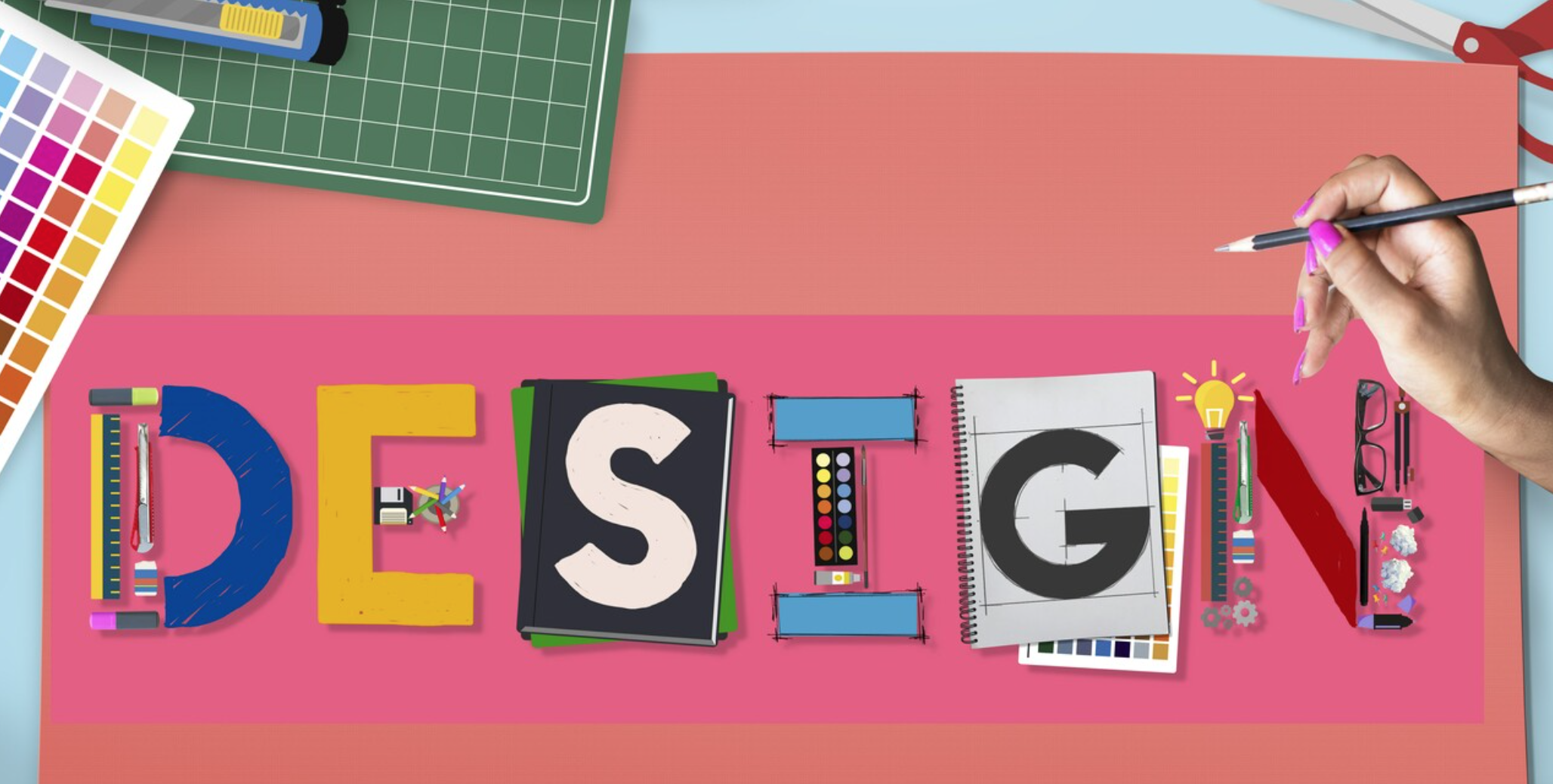
At its core, graphic design is not just about making things look good. It is about communication. Every color choice, typeface, layout decision, and visual hierarchy choice tells a story, whether intentional or not. As designers, our job is to take abstract ideas, emotions, and messages and translate them into visuals that people can instantly understand and feel. That is where storytelling becomes one of the most powerful tools in graphic design.
Storytelling in design is the ability to guide an audience through a message in a clear, engaging, and memorable way. Unlike written or spoken stories, visual stories rely on symbolism, pacing, and context rather than words alone. A well-designed poster can tell you who a brand is, what it stands for, and how it wants to be perceived within seconds. When done right, storytelling turns design from decoration into meaning.
Every strong visual story starts with understanding the message. Before opening any design software, an experienced designer asks questions. Who is this for? What emotion should they feel? What action should they take after seeing this? Without clarity on these points, visuals become disconnected and confusing. Storytelling requires intention. You are not just placing elements on a canvas. You are shaping an experience.
Branding is one of the clearest examples of storytelling through graphic design. A brand identity is essentially an ongoing narrative told through logos, typography, colors, imagery, and tone. A luxury brand might tell a story of refinement and exclusivity through restrained color palettes, elegant typography, and minimal layouts. A youth-focused brand might communicate energy and rebellion through bold colors, expressive type, and dynamic compositions. The story is consistent across every touchpoint, which builds recognition and trust over time.
Typography

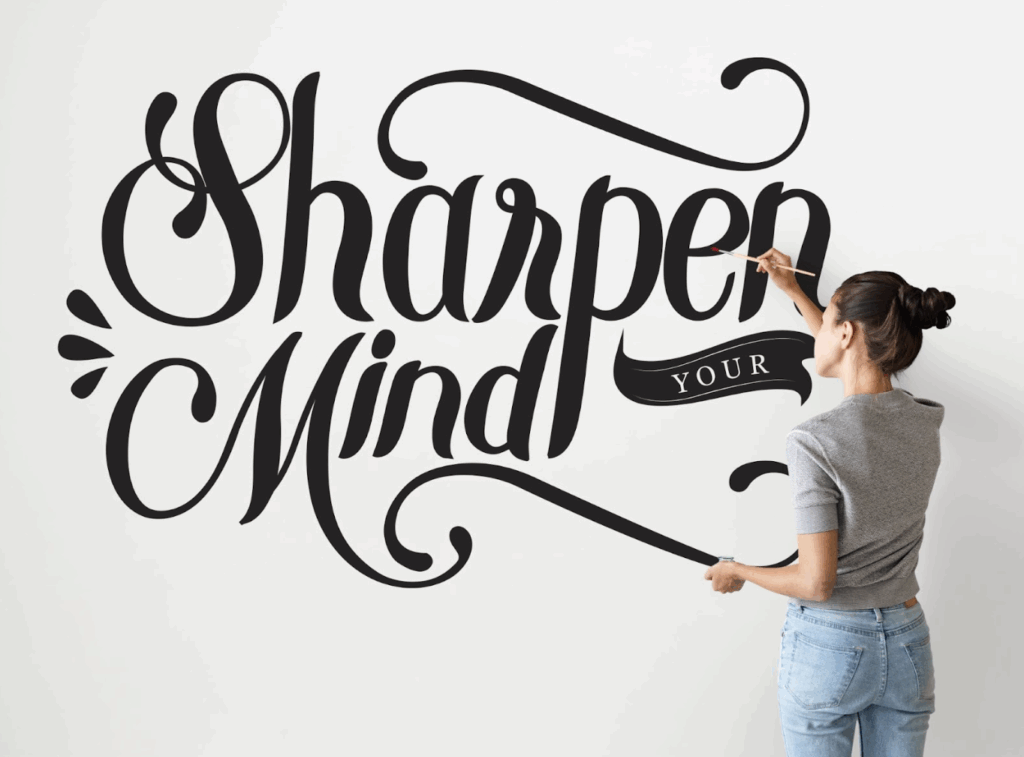
Typography plays a critical role in visual storytelling. Typefaces carry personality and emotion. Serif fonts often suggest tradition, credibility, or sophistication, while sans serif fonts feel modern, clean, and approachable. Script fonts can evoke elegance or creativity, while bold display fonts command attention and urgency. How text is spaced, aligned, and sized also affects how the story unfolds. Headlines grab attention, subheadings guide the reader, and body text delivers depth. Poor typography breaks the story, while thoughtful typography enhances clarity and flow.
Color
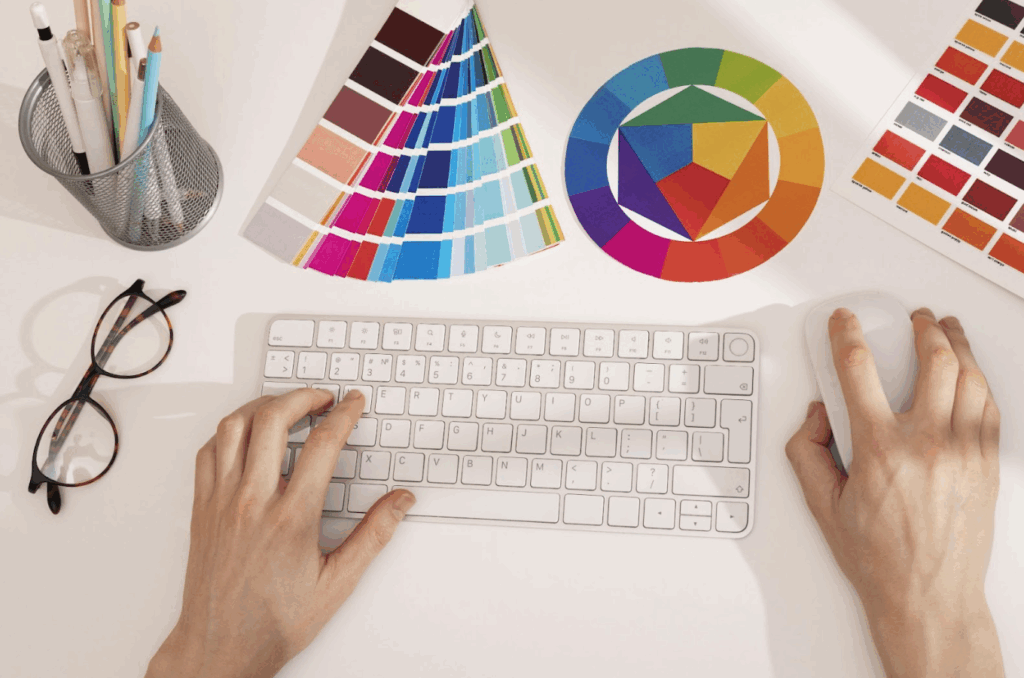
Color is another powerful storytelling device. Colors influence mood and perception almost instantly. Warm tones can feel inviting, energetic, or emotional, while cool tones can feel calm, professional, or distant. Cultural context also matters, since colors carry different meanings across regions. A designer who understands color psychology can subtly guide how an audience feels without them even realizing it. In storytelling, color becomes the emotional undercurrent that supports the message.
Imagery and illustration help anchor stories in real or imagined worlds. Photography can create authenticity, relatability, or aspiration depending on how it is styled and composed. Illustrations can simplify complex ideas, add personality, or create unique brand worlds that photography cannot. The key is consistency. Mixing visual styles without purpose weakens the narrative. Strong storytelling uses visuals that feel like they belong together and serve the same message.
Layout & Composition

Layout and composition determine the pacing of a visual story. Just like a written story has a beginning, middle, and end, a design should guide the viewer’s eye in a deliberate sequence. Visual hierarchy tells the audience what to look at first, second, and last. White space allows moments of pause, while dense areas can create intensity or urgency. When layout is intentional, the audience does not feel overwhelmed. They feel guided.
Storytelling also shows up in problem-solving. Great designers do not just present solutions, they frame problems visually. An infographic that breaks down complex data into digestible visuals tells a story of understanding and clarity. A campaign that addresses a social issue uses visuals to evoke empathy and awareness. In these cases, design becomes a bridge between information and emotion.
Storytelling & Problem-Solving

Storytelling through graphic design has become even more important. People scroll quickly, and attention is limited. Designers have only a few seconds to communicate a message. Clear narratives, strong visual hooks, and emotional resonance make the difference between being noticed or ignored. Motion design, interactive elements, and responsive layouts add new layers to storytelling, but the fundamentals remain the same. Clarity, intention, and emotional connection still lead the way.
Artificial intelligence has introduced new tools that can support visual storytelling, but it cannot replace human judgment and empathy. AI can generate layouts, suggest color palettes, or create imagery, but it does not understand context the way a human designer does. Storytelling requires cultural awareness, emotional intelligence, and ethical responsibility. Designers can use AI to speed up exploration and execution, but the story itself still needs a human voice.
Ultimately, the art of storytelling through graphic design is about empathy. It is about seeing the world through the audience’s eyes and designing with purpose. When designers focus on telling meaningful stories rather than just creating attractive visuals, their work becomes more impactful and memorable. Good design communicates. Great design connects. And it is storytelling that turns connection into lasting influence.
Branding & Design Agency in Atlanta
Ready to turn your brand into a story worth telling? Beautiful design is only half the battle. The other half is strategy.
At The Kool Source, we combine high-impact graphic design with data-driven storytelling to ensure your message doesn’t just look good. It converts.
Start Your Storytelling Journey Today

- The Art of Storytelling Through Graphic Design - January 28, 2026
- Why Branding Matters: A Designer’s Perspective - December 30, 2025
- How to Stay Organized While Juggling Multiple Design Projects - December 1, 2025
0 Comments